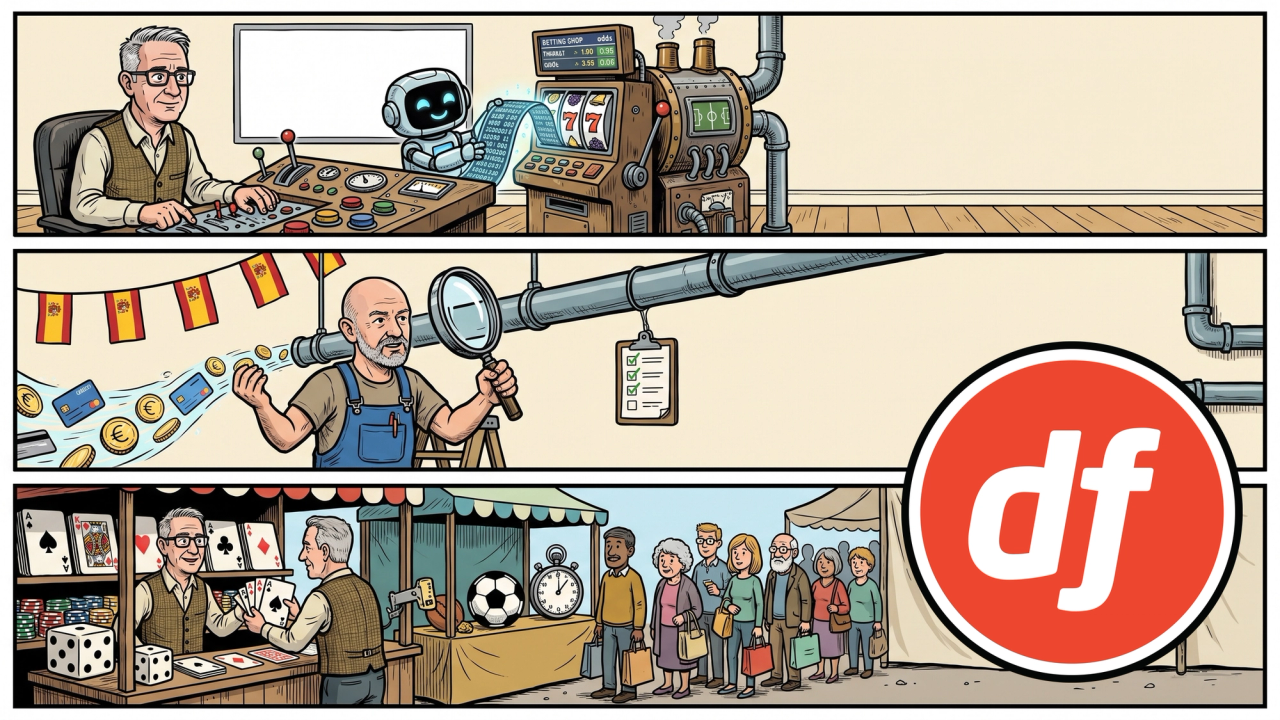
A regulated European market has recently approved an established online casino brand to incorporate online sports betting into its offering. This development reflects a growing trend across licensed jurisdictions where single-product operators are evolving into multi-product entities. For growth teams, the appeal of this expansion is clear. A sportsbook can attract a distinct player demographic, enhance engagement throughout the year, and provide customer relationship management (CRM) with additional opportunities to interact with existing customers. However, the inherent risks are equally evident. Multi-product expansion is often straightforward to announce but challenging to execute effectively. Operators who achieve success in this area typically view the licence acquisition as an intermediate step in a larger process, rather than the ultimate goal.
The Strategic Imperative of Multi-Product Expansion
The decision to expand from a single product, such as an online casino, to a multi-product offering that includes a sportsbook, represents a significant strategic shift. This move is not merely about adding another revenue stream; it is about broadening market appeal, enhancing player lifetime value, and building a more resilient business model. In a competitive iGaming sector, relying solely on one product can limit growth potential and expose an operator to greater market fluctuations. By diversifying, operators can mitigate risks associated with product-specific trends or regulatory changes that might disproportionately affect a single vertical.
Furthermore, a multi-product strategy allows for a more comprehensive understanding of player behaviour. When players engage with both casino games and sports betting, operators gain richer data insights into their preferences, spending habits, and engagement patterns. This holistic view is invaluable for refining marketing strategies, personalising promotions, and optimising the overall player experience. The ability to cross-sell effectively between products can materially increase player retention and average revenue per user, provided the integration and operational execution are seamless. The initial investment in technology, compliance, and marketing for a new product vertical is substantial, but the long-term benefits of a diversified portfolio can justify these costs by creating a more stable and scalable business.
The Critical Sequence of Product Integration
A common pitfall in multi-product expansion is treating the new product, such as a sportsbook, as a mere add-on to an existing casino business. This approach often overlooks the fundamental differences in operational rhythm and player expectations between the two verticals. A sportsbook operates on a distinct cadence, driven by a live events calendar, which necessitates real-time trading capabilities for in-play markets. This dynamic environment contrasts with the generally more static nature of many casino games. Moreover, the compliance scrutiny for sports betting, particularly during high-profile fixtures, can be intense, demanding robust and agile regulatory adherence.
Successful operators approach this expansion with a deliberate and well-defined sequence. They meticulously plan which product will serve as the primary acquisition channel and how cross-selling will function in both directions. This includes determining when to prioritise promotions for one product over the other, based on market conditions, sporting events, or player profiles. Early alignment with compliance teams is also paramount. Responsible gambling and affordability controls must be designed to function cohesively across both products, rather than being developed in isolation for each vertical. This integrated approach ensures consistency for players and simplifies reporting for regulators. Without this strategic sequencing, operators risk creating disjointed player experiences, inefficient operational workflows, and potential compliance vulnerabilities that can undermine the entire expansion effort.
Pre-Launch Execution Checklist
Before an operator can successfully launch a new sportsbook, a comprehensive checklist of critical questions must be addressed. These questions serve as a litmus test for operational readiness and highlight potential areas of weakness that could lead to significant issues post-launch.
Firstly, operators must assess their trading and risk capabilities. Is the system genuinely prepared to handle the complexities and rapid pace of live events, or is it overly reliant on a third-party partner whose flexibility might be limited? A robust in-house or deeply integrated trading solution is often crucial for managing odds, accepting bets, and mitigating financial risk effectively.
Secondly, the CRM stack must be capable of recognising a single player across both casino and sportsbook products. This unified player view is essential for preventing conflicting bonuses or irrelevant messages that can detract from the player experience. Without it, operators risk alienating customers with poorly targeted communications and failing to capitalise on cross-sell opportunities.
Thirdly, a thorough review of licence conditions, reporting requirements, and self-exclusion rules is necessary. These elements must be unified across both verticals to ensure consistent application and compliance. Discrepancies can lead to regulatory breaches and operational inefficiencies.
Finally, operators need a single, comprehensive view of player value that encompasses engagement with both products. Cross-selling is only truly effective if its impact on overall player lifetime value can be accurately measured and attributed. Without this consolidated view, operators cannot fully understand the financial benefits of their multi-product strategy or identify areas for optimisation. Each unaddressed gap in this checklist represents a potential operational incident after launch. Such incidents are not only costly in terms of resources and reputation but also draw unwanted attention from regulators and players alike, especially during the critical initial phases of a new product offering.
Post-Launch Performance Indicators: Six Months In
The true measure of success for a multi-product expansion is not found in the initial launch day headlines, but rather in the sustained performance and synergistic effects observed several months down the line. A critical juncture for evaluation typically occurs around the six-month mark. At this point, the signal of a successful integration is whether the two products demonstrably reinforce each other.
Key performance indicators to monitor include an increase in active days per player, indicating greater engagement across the combined offering. Operators should also observe shared liquidity of attention, where players seamlessly transition between casino games and sports betting, rather than exclusively favouring one. Crucially, the retention curve for the combined player base should show improvement, suggesting that the new product is not merely cannibalising the existing one but is instead enhancing overall player loyalty and reducing churn.
Operators who can clearly report these positive trends and demonstrate the incremental value generated by the multi-product strategy will find it materially easier to justify further investment and secure funding for future expansion. Conversely, those who cannot articulate these benefits, or whose data suggests that two products are yielding roughly the growth of one, will face the challenging task of explaining the rationale and return on investment for their expansion efforts. This period is vital for validating the initial strategic decisions and making informed adjustments to optimise the multi-product offering for long-term growth and profitability.
The Role of Technology and Data Integration
The foundation of a successful multi-product strategy lies in robust technology and seamless data integration. Operators must ensure their underlying platform can support the demands of both casino and sportsbook operations without compromise. This often means investing in a flexible and scalable platform architecture that can handle high transaction volumes, real-time data processing, and complex player journeys across different verticals.
A unified player account management (PAM) system is non-negotiable. This system must provide a single source of truth for player data, including registration details, KYC information, transaction history, bonus eligibility, and responsible gambling settings. Without a unified PAM, operators risk fragmented player profiles, inconsistent experiences, and significant compliance challenges. For instance, if a player self-excludes from the casino, that exclusion must automatically apply to the sportsbook, and vice versa, to meet regulatory requirements and uphold player protection standards.
Furthermore, the integration of analytics and business intelligence tools is paramount. These tools should aggregate data from both casino and sportsbook activities, providing a comprehensive view of player behaviour, product performance, and marketing effectiveness. This integrated data allows for sophisticated segmentation, personalised marketing campaigns, and predictive analytics that can identify at-risk players or anticipate future trends. Operators should look for solutions that offer real-time reporting and customisable dashboards, enabling quick decision-making and agile responses to market changes. The ability to attribute player value accurately across products is directly dependent on the quality and integration of these data systems.
Marketing and Cross-Sell Strategies
Effective marketing and cross-sell strategies are central to realising the full potential of a multi-product offering. Simply having both products available is insufficient; operators must actively guide players between them in a way that enhances their overall experience and increases engagement. This requires a deep understanding of player preferences and behavioural patterns.
For casino players, introducing sports betting might involve targeted promotions during major sporting events, offering free bets or enhanced odds on relevant matches. The messaging should highlight the excitement and social aspects of sports betting, positioning it as a complementary entertainment option. Conversely, for sports bettors, the casino can be presented as a way to engage during off-season periods or between live events. This could involve offering free spins on popular slots or exclusive casino bonuses tied to sports betting activity.
Personalisation is key. Generic cross-sell offers are less effective than those tailored to an individual player's demonstrated interests. Leveraging the unified player data, operators can segment their audience and deliver highly relevant promotions. For example, a player who frequently bets on football might receive an offer for a football-themed slot game, or a casino player who occasionally places small sports bets might be targeted with a special offer for a major upcoming match. The timing of these communications is also critical; promotions should align with player activity patterns and relevant external events. The goal is to create a seamless and intuitive player journey where transitioning between products feels natural and value-additive, rather than forced or intrusive.
Compliance and Responsible Gambling Across Verticals
The expansion into sports betting significantly amplifies the compliance and responsible gambling obligations for operators. Regulators in markets such as the Netherlands, the UK, and other European jurisdictions are increasingly focused on player protection, and this scrutiny extends across all product verticals. Operators must ensure that their responsible gambling frameworks are robust and consistently applied across both casino and sportsbook offerings.
This includes unified self-exclusion schemes, where a player's decision to self-exclude from one product automatically applies to all others within the operator's portfolio. Affordability checks and spend limits must also be integrated, providing a holistic view of a player's financial activity across both verticals. This prevents players from circumventing limits by simply switching between products. The monitoring of player behaviour for signs of problem gambling must also be comprehensive, drawing data from both casino and sports betting activity to identify patterns that might not be apparent in a single vertical.
Furthermore, advertising and marketing communications for both products must adhere to strict regulatory guidelines, particularly concerning responsible gambling messaging. The integration of compliance processes also extends to reporting requirements. Operators need systems that can accurately aggregate and report data for both verticals to regulatory bodies, demonstrating adherence to all licence conditions. Failure to maintain a high standard of compliance across all products can lead to significant penalties, reputational damage, and even licence revocation. Therefore, a proactive and integrated approach to compliance and responsible gambling is not just a regulatory obligation but a fundamental component of sustainable multi-product growth.
Frequently asked questions
What is the primary benefit of adding a sportsbook to an existing casino brand?
How does a sportsbook's operational rhythm differ from a casino's?
Why is a unified player view important for multi-product operators?
What are the risks of treating a sportsbook as a mere add-on?
How can operators measure the success of their multi-product expansion?
A Decision for Sustainable Growth
Expanding an online casino brand to include a sportsbook is a strategic decision that offers significant opportunities for growth and market diversification. However, it is a complex undertaking that demands meticulous planning, robust technological integration, and a deep understanding of both operational and regulatory nuances. The operators who succeed are those who view this expansion not as a simple addition, but as a fundamental evolution of their business model, underpinned by a commitment to seamless player experience, rigorous compliance, and data-driven decision-making.
Multi-product expansion rewards preparation more than ambition. If you are considering this strategic move and wish to pressure-test your launch plan, refine your cross-sell design, or assess your compliance readiness, the Digital Fuel team can provide expert guidance. We invite you to start a conversation with us to explore how we can support your journey towards sustainable multi-product growth.
Ready to put this into practice?
Get in touch